top of page
Minimalist Moda Portresi

LABIOPLASTY

What is labiaplasty?

Labiaplasty is a surgical procedure aimed at improving the appearance and/or function of the inner lips (labia minora) or, in some cases, the outer lips (labia majora).

Labioplasty or labiaplasty?

The correct medical term is labioplasty. The spelling "labiaplasty" is also commonly seen among the general public.

Who is a candidate for labiaplasty?

Labiaplasty is performed on individuals who have excessive growth in the inner labia (labia minora hypertrophy) and experience visual or functional problems due to this size. So, what are the most common complaints of people who apply for labiaplasty?

  • Friction, irritation, and pain in daily life.

  • Hygiene and repetitive irritation.

  • Asymmetry (one side being larger/longer)

  • Discomfort or withdrawal sensation during sexual intercourse (other causes should be ruled out)

  • Discomfort in the genital area while exercising.

  • Changes in shape due to birth, weight changes, or age.

  • Self-confidence and aesthetic concerns

A person may be uncomfortable with the appearance of their genital area. The important point here is that the decision should be based on the individual's own wishes and that expectations should be realistic. Not only discomfort or appearance, but also the person's perspective on the surgery influences the decision-making process.

  • Able to clearly describe their discomfort,

  • Someone whose expectations are realistic,

  • General health status does not pose a risk.

  • Individuals who can adapt to the healing process may be suitable candidates for labiaplasty.

Kocaeli labioplasti

What is the "normal" structure of the genital area?

Everyone's vulva anatomy is uniquely shaped. Therefore, the boundaries of a "normal appearance" for the genital area are not clearly defined. Common concerns include the inner labia protruding beyond the outer labia, differences in length, or asymmetry. These do not necessarily require surgery. However, surgery may be considered if the individual is visually bothered, experiences functional problems due to the size of the inner labia, or if hygiene issues reduce their quality of life.

There is no mathematical criterion for determining the need for surgery due to labia minora size; the degree of discomfort and certain anatomical characteristics are factors that influence the decision for surgery.

Who might not be a suitable candidate for labiaplasty?

In some cases, labiaplasty surgery may not be suitable or may need to be postponed. If the underlying problem preventing surgery is treatable, it will be treated first, and then surgery will be planned. Points to consider:

  • Active infection, suspicion of dermatological disease.

  • Bleeding/clotting problems or use of blood thinners

  • Uncontrolled diabetes

  • Smoking: negatively affects recovery.

  • Unrealistic expectations: having body image goals that are inconsistent with anatomical structure.

  • Pregnancy: The surgery can be performed approximately one year after delivery.

A detailed gynecological check-up before surgery may be safer and healthier for the patient.

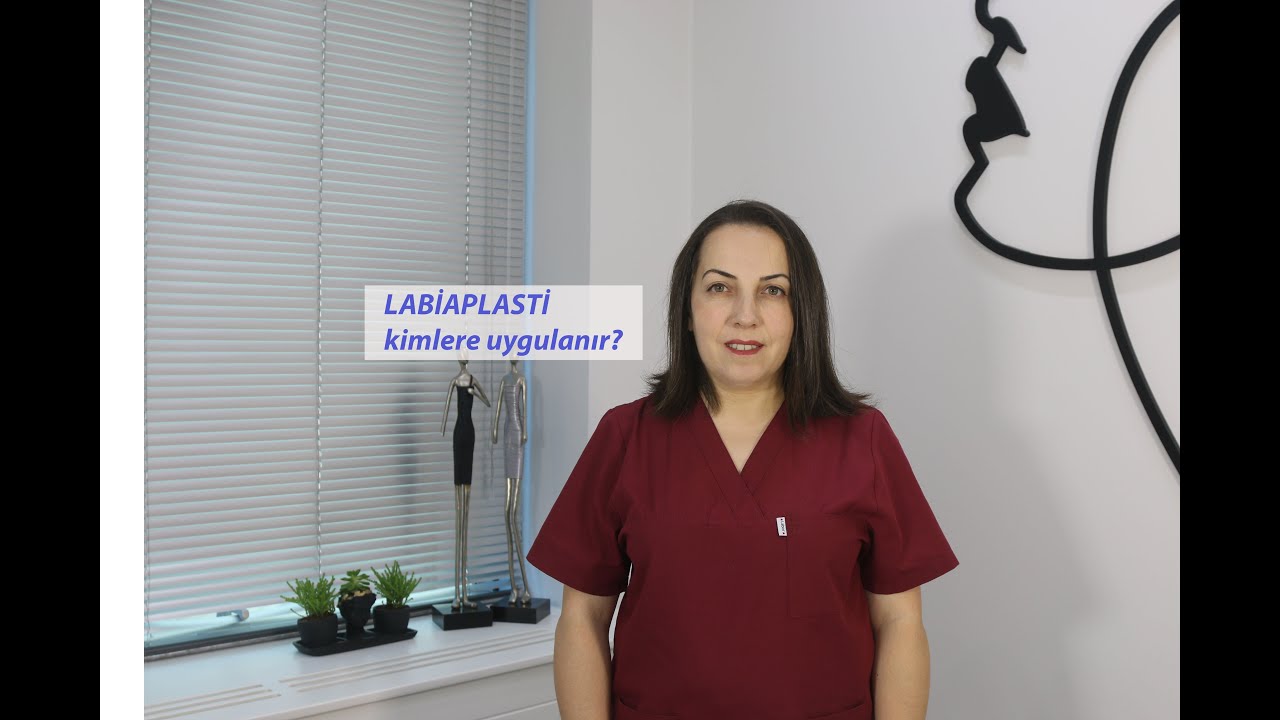
LABİAPLASTİ kimlere uygulanır? (GENİTAL İÇ DUDAK KÜÇÜLTME)

LABİAPLASTİ kimlere uygulanır? (GENİTAL İÇ DUDAK KÜÇÜLTME)

Is there an age limit for labiaplasty?

Labiaplasty (genital inner labia aesthetics) surgeries can be performed from the age of 20 onwards, once genital development is complete. It is important that the decision to have the surgery is made voluntarily, that the individual is psychologically ready for the surgery, and that they are mature enough to take responsibility for any changes to their genital area. I prefer not to perform this surgery on minors.

Labiaplasty initial examination and assessment of conditions

During the first appointment, usually:

  • Which complaint is the most prominent?   Is it friction, aesthetic concerns, or asymmetry?

  • The length and thickness, tissue structure, and asymmetry of the labia minora are examined.

  • The presence or absence of clitoral HUD (skin covering the clitoris) is checked.

  • Is there volume loss and laxity in the outer labia?

  • Are any additional steps required?

  • Details regarding the recovery plan: return to work or school routine, sports, and sexual life.

  • Risk factors: smoking, diabetes, bleeding tendency, medications

  • Whether the expectations are realistic is discussed, and a personalized plan is created.

Techniques used in labiaplasty surgery.

Techniques used in labiaplasty

1) Trimming technique

The procedure involves removing excess tissue from the inner labia corners to reshape the lips. It may also be preferred in some individuals to reduce color and texture changes along the border or to refine the contour.

2) Wedge technique

The lip is shortened by removing a wedge-shaped piece of lip tissue. This technique can help preserve a more "natural" lip line. Various variations are possible.

3) Superior flap technique

The upper part of the labia is prepared like a flap; excess tissue is removed from the lower part, and the flap is adapted to the lower edge of the labia. It can be considered a slightly modified version of the wedge technique. Excess skin from the fold between the inner and outer labia and around the clitoris is also added to the removed tissues.

4) Deepitelation technique

The labial skin is debridemented internally and externally, leaving a thin strip of skin at its most distal end, and the remaining tissues are sutured onto themselves.

5) Combined plans (asymmetries/clitoral hurdles)

In some patients, labia minora reduction alone is not sufficient; additional adjustments such as correcting asymmetry or eliminating excessive clitoral hood may be necessary.

Fat injections or filler injections can be performed to address insufficient volume in the labia majora.

The choice of technique depends on the individual's anatomical characteristics, the size of the labia minora, and whether additional procedures are required. Personalized planning is crucial. Selecting the appropriate technique for the patient ensures a safer and more effective surgical procedure, making it possible to achieve the desired outcome.

How is labiaplasty performed?

  • Labiaplasty can be performed under sedation, local or general anesthesia.

  • The type of anesthesia is determined based on the surgical plan and the patient's comfort needs.

  • It takes approximately 1-1.5 hours.

  • Hospitalization is usually not required.

  • Self-dissolving sutures are used.

  • It can be combined with other cosmetic surgeries.

Labiaplasty recovery process

The recovery process after labiaplasty can vary considerably from person to person. Scheduling the surgery after the menstrual period allows for a suitable time for healing until the next period. However, because the genital area is exposed to many different secretions, healing can sometimes be delayed. Expectations for the post-operative period should be planned on an individual basis.

Post-labioplasty care recommendations

  • There may be slight bleeding in the first few days; sanitary pads can be used.

  • A clean gauze pad is placed on top of the sanitary pad to prevent direct contact between the pad's surface and the wound.

  • Avoid using products with an unsuitable pH level for genital hygiene.

  • Comfortable underwear and clothing that will reduce friction should be preferred during the first week.

  • After using the toilet, gently clean yourself with antiseptic solution (Batikon).

  • The prescribed medications should be used regularly.

  • Avoid situations that will irritate the area.

  • Activities that increase friction, such as strenuous sports, cycling, and long walks, should be postponed until after recovery.

  • Check-ups should not be neglected.

What are the risks of labiaplasty surgery?

  • Bleeding, hematoma

  • Infection

  • Delayed wound healing.

  • Opening at the suture line

  • Asymmetry: Existing asymmetries may sometimes not be corrected.

  • Temporary sensory changes, increased or decreased sensitivity.

  • Scar tissue: Scars are generally left in the natural crease and become less noticeable over time; rarely, scarring may occur in people with impaired wound healing.

  • If the correct technique is not used, such as in cases of overremoval of the labia minora, tension and susceptibility to genital infections can occur.

Risk level can vary depending on factors such as smoking, diabetes, skin type, and adherence to skincare recommendations.

Mavi Spor Giyim

After labiaplasty surgery

Sexual life after labiaplasty

The goal of labiaplasty is to improve quality of life while preserving function through targeted planning.

Sexual activity should be avoided for about 6 weeks after surgery. Temporary changes in genital sensation may occur. Sensitivity or tension may be felt during the first sexual encounters after surgery.

Labiaplasty stitches and scars.

In labiaplasty surgery, incisions are usually planned in natural crease areas. The scars are difficult to notice from the outside and are expected to become less prominent over time. What kind of scar will it look like?

  • personal wound healing,

  • maintenance compliance,

  • It depends on factors such as tissue structure.

We generally use dissolvable sutures in labiaplasty surgeries. We expect the sutures to completely dissolve and fall out within 6-8 weeks at the latest. During follow-up appointments, the suture line is evaluated and guidance is provided if necessary.

Labiaplasty surgery prices 2026

A precise price for labiaplasty surgery requires an assessment of suitability for the procedure, an evaluation of risk factors, and the determination of the appropriate technique. This primarily necessitates an initial examination. Factors affecting labiaplasty costs in Kocaeli include:

  • Scope of the transaction (single-sided/double-sided, level of asymmetry)

  • Additional modifications needed, such as a clitoral HUD.

  • Type of anesthesia

  • Hospital and clinic conditions (we prefer to perform the procedure in a hospital due to patient safety reasons)

  • The surgeon's experience

  • These can be listed as inspection and maintenance plans.

Preparation checklist before your appointment

  • Note down all medications and supplements you are taking (including those that thin the blood).

  • Write down your existing complaints: friction, sports, relationship, hygiene, asymmetry

  • Define your expectations: such as "More comfortable," "Asymmetry should be corrected," and plan how to express yourself clearly.

  • Note down your last menstrual period date and your menstrual cycle regularity.

  • Note down your questions about the surgery.

Labiaplasty surgery frequently asked questions

Is labiaplasty purely cosmetic?

Labiaplasty is not performed solely for aesthetic reasons. Functional complaints such as friction, irritation, and discomfort during sports or sexual intercourse are also frequent reasons.

How long does labiaplasty take to heal?

Initial relief after labiaplasty usually increases within 1-2 weeks; however, full healing and tissue settling may take several weeks. This timeframe varies from person to person.

Will the asymmetry disappear completely?

The goal of labiaplasty is to reduce significant asymmetries. Mild asymmetry is normal in human anatomy; "complete symmetry" may not always be possible.

Can there be loss of sensation after labiaplasty?

Temporary changes in sensation may occur. Permanent and significant loss of sensation is rare.

Is further processing required?

In most patients, it is not necessary. However, correction may rarely be needed depending on the improvement, asymmetry, or expectations.

Labiaplasty surgery results

The decision for labiaplasty is personal; your complaints, anatomy, and expectations will be evaluated together during the examination to select the right candidate and the right technique. During the consultation, the appropriate technique, recovery schedule, and aftercare plan for you will be clarified. For quick answers to your questions, you can reach us via WhatsApp or DM . An appointment is required for a comprehensive evaluation and information session.


İLETİŞİM

WHATSAPP

+90 505 799 29 98

Phone number

+90 262 331 61 61

  • Instagram - Beyaz Çember
  • Facebook - Beyaz Çember
  • YouTube - Beyaz Çember
  • X
  • LinkedIn

HOSPITALS

Gebze John Hopkins ASM
Atakent  Cihan Hospital

+90 505 799 2998

ADDRESS

Izmit Korfez Mah.
Ankara Karayolu 
St. No:125

This site has been prepared by  Op.Dr.Nurgül Altuntaş for informational purposes. The information given here is not a substitute for a doctor's examination and cannot be used for prescription or treatment purposes.

Since treatment recommendations will vary from person to person, it is recommended that you consult your doctor to learn about the appropriate treatment.

Design by @opdrnurgulaltuntas  All rights reserved. 

bottom of page